Torah: VaYikra (Leviticus) 6:1 — 8:36; Haftarah Shabbat HaGadol: Malachi 3:4-24
Shabbat haGadol
IS YOUR HEART READY FOR PASSOVER?
The Shabbat which precedes Passover is called Shabbat haGadol, the Great Shabbat, to commemorate the many miracles that God performed for the people of Israel. According to tradition, the 10th of Aviv in the year of the exodus was a Shabbat. It was considered a miracle that the Israelites could on that day select a lamb for sacrifice without being molested by their Egyptian masters who considered the lamb as a sacred animal. This year Shabbat haGadol falls right before the night of Passover of Aviv 14, April 12. The Biblical Passover is only the night of Aviv 14, but since we eat Matza, Unleavened Bread, for seven days after Passover night, the Jewish tradition considered these days as an extension to Passover and in the diaspora it added a second night.
The Haftara portion of Malachi speaks of the “great and dreadful day of the LORD” on which the Messiah will appear.
But, is your heart ready for Passover?
God gave us the commandment to observe the Passover on the 14 of Aviv, at nightfall. We now call this holiday, "The Festival of Freedom." But the Israelites were still slaves in Egypt on that night and, even though they left the next day, they got only as far as the desert. Not much freedom there either. Therefore, Passover has to have a deeper meaning because it seems that freedom from the world’s bondage it never ends. Indeed, we have seen its amplified meaning in the atoning sacrifice, the death and resurrection of Yeshua, and that is the real freedom, not the physical freedom but the spiritual one, the freedom from the slavery of sin. Without knowing Yeshua the Festival remains just a religious exercise void of its meaning.
The importance of Passover is amplified by a unique and surprisingly overlooked commandment of God found in Numbers 9:10-12: “Speak to the people of Israel, saying, If any man of you or of your posterity shall be unclean because of a dead body, or is in a journey far away, he shall still keep the Passover to the Lord. The fourteenth day of the second month at evening they shall keep it, and eat it with unleavened bread and bitter herbs. They shall leave none of it to the morning, nor break any bone of it; according to all the ordinances of the Passover they shall keep it.”
If someone could not observe Passover on the first month of the Biblical year, the month of Aviv, God gives that person another chance on the second month, the month of Iyar, it is called Pesach Sheini, the Second Passover. This is the only Holiday that God made this kind of provision - giving people a second chance - signaling the importance of Passover which we, the Messianic believers, can understand because it symbolizes the substitutionary sacrifice of Yeshua on that Roman execution stake. This second Passover, Pesach Sheini, tells us once more that our God is a God of grace. He will not break off a battered reed and He will not put out a smoldering wick, but He will give you a second chance to believe in the Lamb of God, who was sacrificed by a terrible and agonizing death for you and me to receive forgiveness from our sins. On Passover God extends His grace and invites you to believe and receive His gift of freedom from the condemnation of sin, His gift of life and everlasting shalom. This is indeed the true meaning of the Festival of Freedom.
But Yeshua not only is inviting us to receive salvation, He is also asking us to remember Him through the observance of Passover.
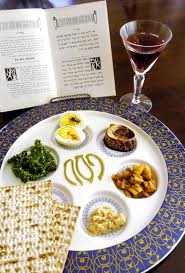
"And when the hour had come He (Yeshua) reclined at the table and the Moshiach's Shluchim were with Him. And He said to them, "With great longing I have desired to eat this Pesach with you before I suffer. For I say to you that I may by no means eat it until it is fulfilled in the Malchut Hashem." And having taken the Cup of Redemption, having made the bracha, He said, "Take this and share it among yourselves, for I say to you that from now on by no means shall I drink from the pri hagefen until the Malchut Hashem comes." And having taken the Afikoman and having made the haMotzi, He broke the matzah and gave it to them, saying, "This is My body being given for you; this do in remembrance of Me." And He took the cup similarly after they ate, saying, "This cup is the new covenant in My blood, being shed for you" - Luke 22:14-20.
Yeshua said, 'Do this in memory of Me' and that “this” means partake of the elements of Passover - symbols of His body. He said, 'Until I come again observe the Passover in remembrance of Me,' because after He comes again, He will have fulfilled Rosh haShanah and Yom Kippur - the Fall Holy Days, and then we will be observing the Festival of Sukkot to celebrate His presence among us. But until He comes again what we will do in remembrance of Him is to observe Passover, or the Lord's last Seder, because that is what He had fulfilled for us as the sacrificial Lamb of God.
But in order to prepare for the observance of Passover we have to search for "chometz," for leaven, in our hearts and to get it out of our lives. We have our hearts clean but maybe we overlook the little crumbs in dark corners. Leaven in Scripture is always symbolic of sin, but why is sin associated with leaven? Because just as a little leaven rises and leavens the whole lump of dough, so, too, a little sin can spread and ruin our lives, our fellowship with Him and with each other.
That was the case in Corinth, so Rav Shaul says in the first letter to the Corinthians chapter 5, verse 7: "Clean out the old leaven, that you may be a new lump, just as you are in fact unleavened [in God's eyes]. For Messiah our Passover [Lamb] has been sacrificed." What he is saying to us is: clean out your heart. Then he continues in verse 8: "Let us therefore celebrate the feast not with old leaven, nor with the leaven of malice and wickedness, but with the unleavened bread [the matzah] of sincerity and truth."
Therefore, Yeshua asks us to proclaim His death through the Passover observance. Passover has such significance in the life of a Jewish person that God gives a warning: “In the first month, on the fourteenth day of the month at evening (Passover), you shall eat unleavened bread, until the twenty first day of the month at evening. Seven days shall there be no leaven found in your houses; for whoever eats that which is leavened, that soul shall be cut off from the congregation of Israel” Exodus 12:18-19. If someone is not observing this Holidays he or she is being cut off, meaning that is removing himself or herself - not by God - from the congregation of Israel. That person becomes the fifth son, one that does not even know that he has a rich heritage from which he can gain a deeper relationship with God.
Eating Matzah and foods without leaven - being the symbols of a life without sin - during this Festival, are the only items required for this Holyday which should represent the way we live our lives, showing on the outside our transformed lives in Yeshua. We should also eat matzah throughout the year because Matzah is the symbol of the body of our Savior and, thus, remember what He did on our behalf.
Let's search for chometz in our lives, let's clean our hearts and be holy for He is Holy, and may this Passover feast be celebrated with a true Messianic spirit and joy.
"Give thanks to the Lord for He is Good"
Parashah Tzav continues to discuss the offerings mentioned in the previous chapters: elevation-offering, meal-offering, peace-offering, sin-offering, and guilt-offering, however, this Torah portion speaks of these offerings as they relate to Aharon and his sons:
“The LORD spoke to Moshe, saying: ‘Command Aharon and his sons...” Vayikra (Leviticus) 6:1, and adds the teachings of a new offering, the inauguration-offering. These offering were divided into two-parts. One part to be a fire offering of a satisfying aroma to the LORD, and another part was to be eaten by the Kohanim, the ones performing the offering, that is because the Levites were to work only in the Temple and had no land inheritance to sustain themselves.
Among all these offerings there was a unique one, the peace-offering. The peace-offering could have been either a thanksgiving-offering or a feast-offering. What was interesting about the thanksgiving-offering was that it had be an offering of three elements: unleavened bread, leavened bread, and a blood offering. The instruction for this thanksgiving-offering was that it must be eaten completely on the day of its offering and not leave any of it until morning.
"And this is the Torah of the sacrifice of peace offerings, which he shall offer to the LORD. If he offers it for a thanksgiving [todah], then he shall offer with the sacrifice of thanksgiving unleavened cakes mixed with oil, and unleavened wafers anointed with oil, and cakes mixed with oil, of fine flour, fried. Besides the cakes, he shall offer for his offering leavened bread with the sacrifice of his peace offerings for thanksgiving. And from it he shall offer one out of each offering for an offering to the LORD, and to the kohen who sprinkles the blood of the peace offerings. And the meat of the sacrifice of his peace offerings for thanksgiving shall be eaten the same day that it is offered; he shall not leave any of it until the morning." Vayikra (Leviticus) 7:11-15
From this passage the sages taught that giving thanks to God is a daily activity; never let a day pass without giving thanks to Him. The symbolism of the two kinds of loaves is that the worshiper recognizes that he owes everything - his food and his well-being - to God, but that the unleavened bread, the matzah, symbolizes the worshiper's rededication to God, as matzah is a symbol of a life without sin. The sages also taught that after the coming of Messiah and the perfection of the world – a new heaven and a new earth – there will be no further need for atonement offerings because people will no longer sin, but that there will always be thanksgiving-offerings. People will thank God because they will realize that everything that God does is ultimately good.
But we know that Messiah already came and even though the world is not perfect yet because God gave it more time to repent, we as believers should take courage that everything that happens in our lives is ultimately for our own good because Yeshua did not come to shed His blood and then left us to fend for ourselves.
“We know that all things work together for good for those who love God, to those who are called according to His purpose... If God is for us, who can be against us? He who didn't spare His own Son, but delivered Him up for us all, how would He not also with Him grant us all things?” Romans 8:28-32
Therefore, let’s all give thanks to God for sending Messiah to atone for us,
“Give thanks to the LORD, for He is good;
For His lovingkindness is everlasting...
Who can speak of the mighty deeds of the LORD,
Or can show forth all His praise?”
Tehilim (Psalms) 106:1,2
Shabbat joy, peace, and blessings! Shabbat Shalom and Hag Pesah Sameah!